

The Power of the Circle: Scaling Accountability with Goalbadger Circle & Clans
Here's the truth about group accountability: it's not magic, and it's not about motivation speeches.
It's about removing friction when you need to scale progress beyond yourself. Whether you're a life coach managing a 20-person cohort, a small business trying to align a remote team, or a family trying to keep everyone on track without one person carrying the entire mental load, the problem is always the same.
How do you make accountability real, visible, and sustainable for more than just you?
That's where Circle and Clans fit together like puzzle pieces.
Circle is the access layer. Clans are the accountability layer.
Let's clear this up right away, because the two are not the same thing.
Goalbadger Circle is seat-based Pro access. You buy a certain number of seats, you invite people by email, and they receive full Pro features. Circle handles the subscription and billing logistics. Think of it as the infrastructure that removes friction from getting a group onto the platform.
Clans are the private shared spaces where the actual accountability work happens. Inside a Clan, people share their goal maps, comment on progress, check in consistently, and see each other's wins in real time.
Circle gets everyone in the door. Clans keep them engaged when the initial excitement fades.

You're not choosing one over the other. You're using both.
Why group accountability works (and no, it's not just vibes)
I love a good motivational quote as much as anyone. But motivation is weather. It changes hourly, and it's not a strategy.
What actually works is structure, feedback loops, and social support backed by behavioral science.
Implementation intentions: The if-then trick that holds up under scrutiny
Implementation intentions are simple. You define a trigger and a response: If situation X happens, then I will do action Y.
A large meta-analysis covering 94 studies and over 8,000 participants found that implementation intentions produced a medium-to-large improvement in goal attainment (Gollwitzer & Sheeran, 2006).
Translation: when you create clear "if-then" plans inside your action plan template, you're not just being organized. You're leveraging behavioral design that consistently outperforms vague intentions.
Progress monitoring: The underrated superpower
Another meta-analysis of 138 studies involving nearly 20,000 participants found that interventions increasing progress monitoring significantly improved goal attainment (Harkin et al., 2016).
Two findings matter most:
Monitoring works better when progress is recorded (not just mentally noted).
Monitoring works better when outcomes are reported or made public to others.
In other words: tracking helps, but sharing the tracking with the right people helps more.
That's the Circle + Clan model in one sentence.
The January problem, and why "Quitter's Day" is a real thing
Every year, the same movie plays out. Week 1 of January brings New Year energy. Week 2 brings real life, with snacks, emails, and unexpected chaos. By mid-January, the internet has nicknamed a specific day for quitting resolutions.
I'm not bringing this up to shame anyone. I'm bringing it up because it proves the point: systems that depend on willpower alone will fail when life gets complicated.
Goalbadger is built to be the scaffolding when willpower dips. It's your supportive partner in the corner reminding you what the next step is, helping you see your progress when you can't feel it, and connecting you to others who are navigating the same messy middle.
Tiered pricing: rewarding growth, not punishing it
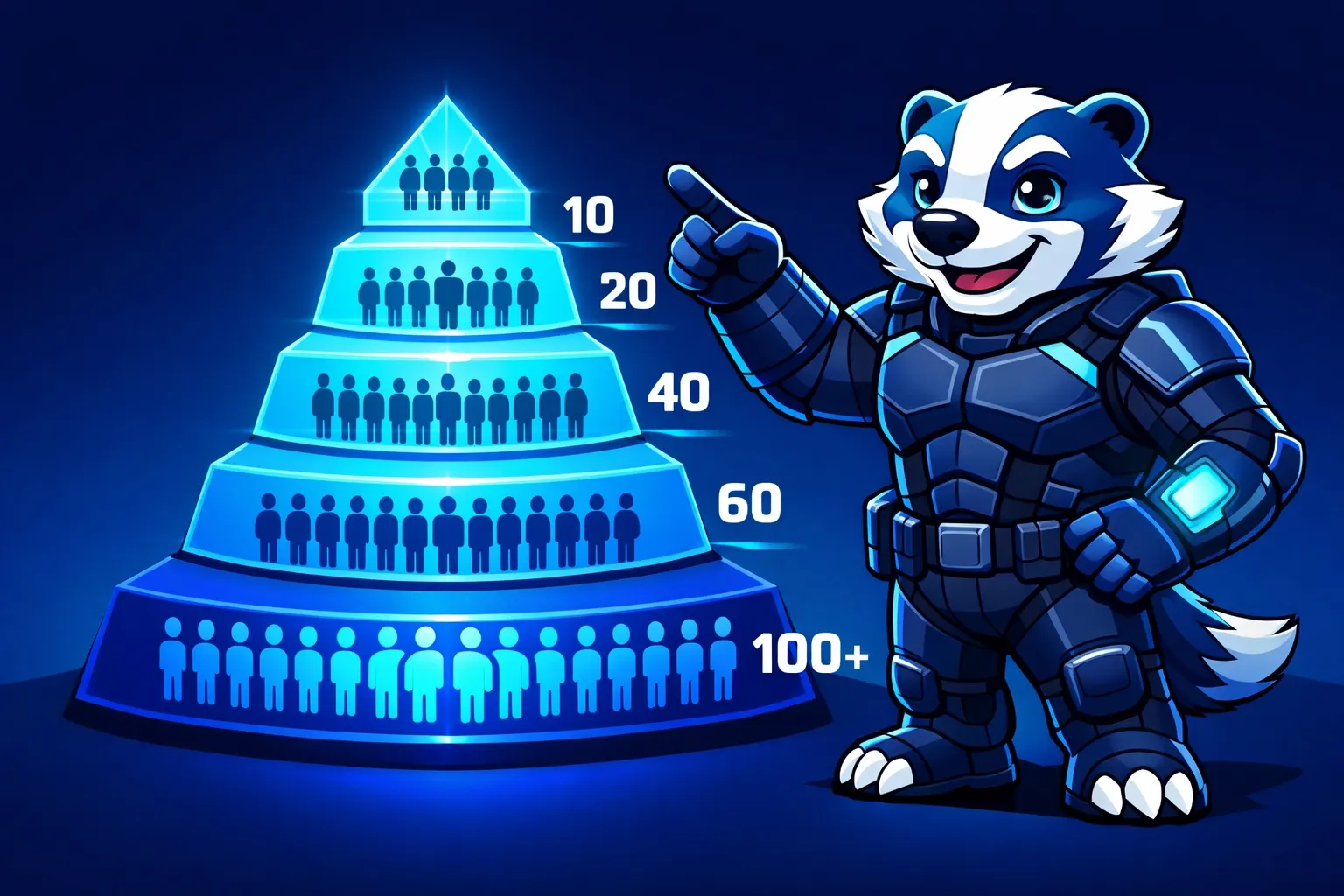
Circle pricing is seat-based and tiered. As you buy more seats, the unit price per seat goes down.
Here's what that looks like:
Total Seats in CircleUnit Price per Seat1 to 10$20.0011 to 20$18.0021 to 40$16.0041 to 60$14.0061 to 80$12.0081 to 100$10.00101 or more$10.00
Why tiered? Because most groups don't start at scale. Most life coaches don't launch with 50 paid seats. Most small businesses don't license tools for everyone on day one. They start with a core group, prove it works, then expand.
Tiered pricing rewards that reality.
Pricing examples:
Family of 4: 4 seats × $20 = $80/month
Team of 12: 12 seats × $18 = $216/month
Cohort of 30: 30 seats × $16 = $480/month
Program of 75: 75 seats × $12 = $900/month
And yes, every seat includes full Pro access, no feature gating, no surprises. Plus, new users get a 14-day Pro trial to explore before committing.
Who Circle is built for
Circle is designed for situations where one person funds access for a group, and the group needs structured accountability to stay on track.
Life coaches and group coaching programs
If you're a life coach, you already know the problem. Clients leave a session inspired, then the week happens. Circle solves access. Clans solve continuity.
Use cases:
8 to 20 person group coaching cohorts
"90-day transformation" programs
Habit-building challenges with weekly check-ins
Hybrid 1:1 plus community accountability
What changes: you're not chasing separate subscriptions, clients have one shared accountability app space, and progress becomes visible between sessions.
Small businesses and teams under 100 employees
Use cases:
Product launches
Sales playbooks and execution
Hiring and onboarding sprints
Quarterly OKR-style goals
Why it works: progress monitoring is built in, and accountability doesn't require a manager to nag.
Families
Many families run on one person's executive function planner. Circle turns household goals into a shared system, not one parent's mental load.
Use cases:
Homework routines
Chores and weekly resets
Fitness habits
"Sunday planning" that survives until Thursday
Teachers and tutors
Use cases:
Exam prep cohorts
Project milestones
Reading challenges
Why it works: students benefit from structure plus visibility, and the teacher gets less "I forgot" and more "I did."
How a life coach uses Circle + Clans: a practical walkthrough
If you're a life coach and you want something you can implement this week, here's the step-by-step.
Step 1: Create a Circle
Choose your seat count based on your cohort size.
Invite members by email.
Step 2: Create a Clan for the cohort
One Clan per cohort or per program.
Set shared norms: weekly check-in, one next step, one reflection.
Step 3: Convert goals into "if-then" commitments This is where science becomes immediately usable.
Examples:
If it's 7:30am on weekdays, then I do 10 minutes of movement.
If I finish lunch, then I do my 15-minute admin sprint.
Step 4: Make progress monitoring visible
Encourage daily or twice-weekly check-ins inside the Clan.
Use the space to celebrate wins and normalize setbacks.
Step 5: Scale seats when it works Start with a small cohort, prove outcomes, then expand. This is the boring truth of successful programs: consistency beats fireworks.
FAQs
Do Circle seats include full Pro? Yes. Each seat includes the full Pro version with all features.
Is Circle the same as Clans? No. Circle is billing and access. Clans are the accountability spaces where the work happens.
Do I need a lot of seats to start? No. Start with 5 to 10, prove it works, then expand.
Can I run multiple cohorts? Yes. Many coaches run one Circle for billing, then multiple Clans for separate cohorts or programs.
The bottom line
Scaling accountability isn't about getting louder or more inspirational. It's about removing friction, creating structure, and leveraging the science of what actually works: clear plans, visible progress, and supportive people who keep you honest when life gets messy.
Circle and Clans give you that infrastructure. Whether you're coaching a cohort, aligning a team, managing a family, or guiding students: you now have a system that rewards growth, not punishes it.
Ready to see how it works? Start your 14-day Pro trial and build your first Circle today.
References:
Gollwitzer, P. M., & Sheeran, P. (2006). Implementation intentions and goal achievement: A meta-analysis of effects and processes. Advances in Experimental Social Psychology, 38, 69-119.
Harkin, B., Webb, T. L., Chang, B. P. I., et al. (2016). Does monitoring goal progress promote goal attainment? A meta-analysis of the experimental evidence. Psychological Bulletin, 142(2), 198-229.